
Claims should stay proportional to proof
If a metric, audit, or certification cannot be shown internally, the public copy should describe the process instead of asserting the result as fact.
This page is written to help shoppers understand how GlowGlitch talks about impact responsibly. It prioritizes process, documentation, and review standards over broad environmental promises that require stronger substantiation.
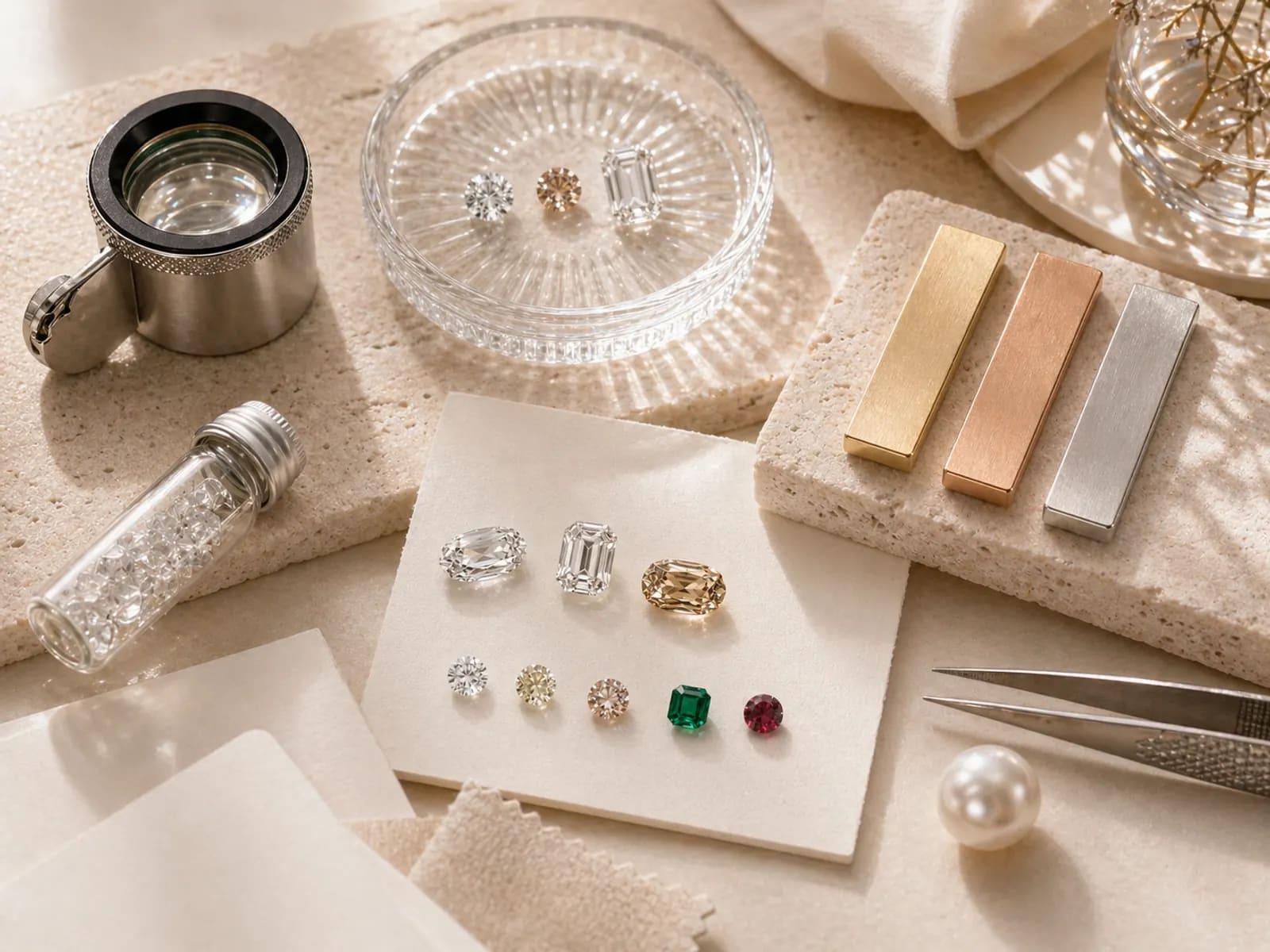
If a metric, audit, or certification cannot be shown internally, the public copy should describe the process instead of asserting the result as fact.
The image system favors macro samples, proof flat lays, and care references over broad impact symbols that would imply unsupported certification.



GlowGlitch can state that the brand works with lab-grown stones where that is true in the assortment and explain why shoppers may prefer that route.

When discussing recycled content, plating, silver, or gold, the copy should name the material approach and avoid implying a universal standard unless every product follows it.

Any statement about longevity should be paired with the maintenance or usage conditions that make the claim fair and understandable.
Use certificates, supplier documentation, product-level specifications, or dated internal sourcing notes when the business wants to publish a stronger statement.
Describe the sourcing process, review criteria, and current operating standard without overstating audits, carbon claims, or third-party verification.
Partner copy should describe the role each supplier or service provider plays without implying formal certification, audit status, or environmental performance that has not been documented for public use.
If GlowGlitch wants a future partner section with stronger proof, it should pair each partner claim with a source type, an effective date, and a review owner inside the business.
Until that exists, the safest public position is that GlowGlitch reviews sourcing and production inputs as part of its operating process and can escalate detailed questions through concierge.
Because those claims are high-risk when they are not backed by a dated internal source. The page is designed to be credible before it is expansive.
The best path is the product page when specifications are available, then concierge for any question that requires confirmation about a specific item or custom request.
Yes. The structure is ready for stronger proof blocks once the business has verified documentation, dated updates, and approved claim language.